Farmers Branch Water Filtration, Explained and Put in Writing
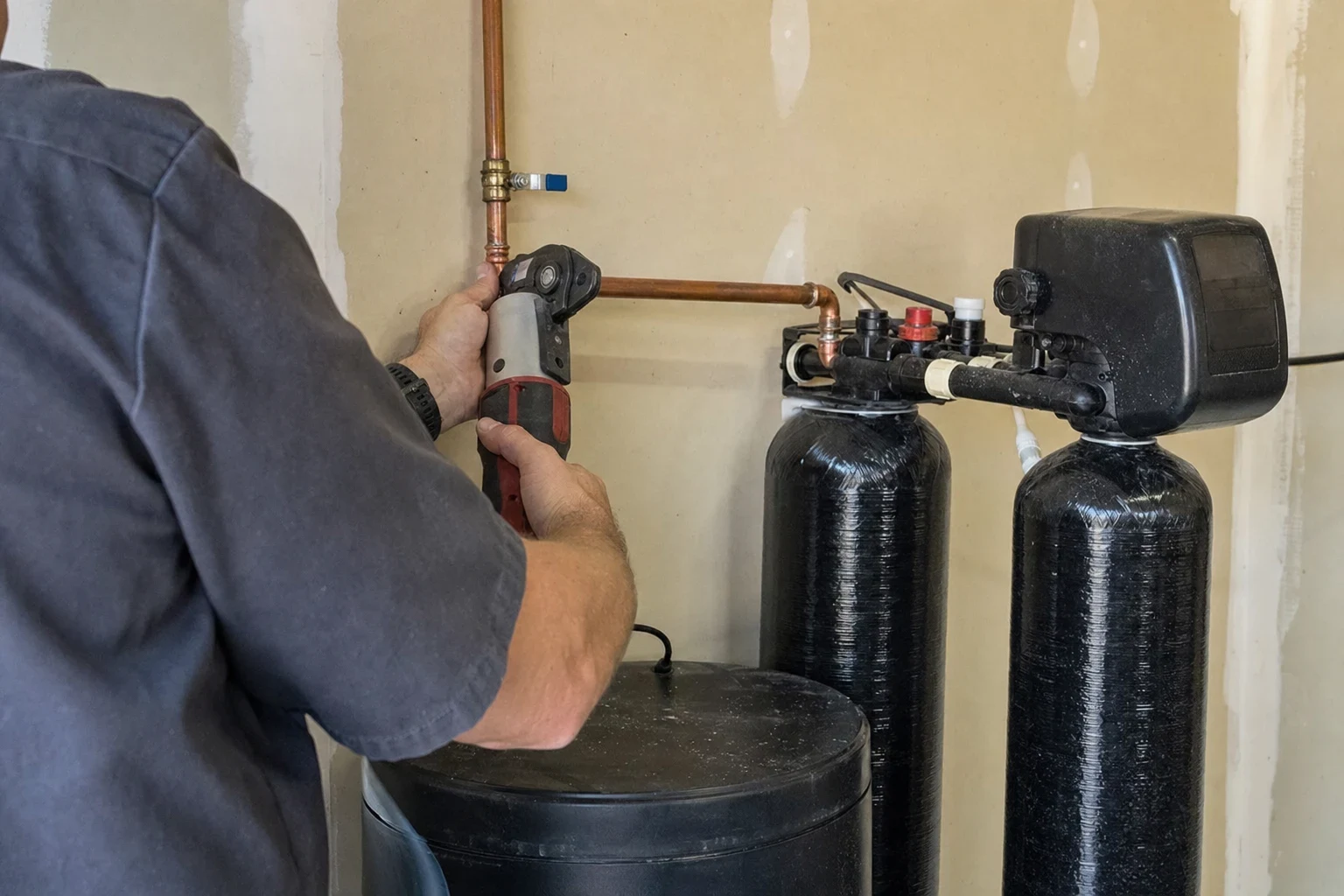
We install whole-home filtration, water softeners, under-sink reverse osmosis and UV water treatment in your home. Before anything goes in, you get a written quote that names each part and why it is there. We work in Farmers Branch and nearby towns like Carrollton and Addison.
- Water report before quoting
- Itemized written quotes
- Photos of what we find
- Install area cleaned after
Where We Work
We are based in Farmers Branch and install systems in homes throughout the cities around it. Our regular schedule covers Carrollton, Addison, Coppell, Irving, Richardson, Plano and Lewisville, plus University Park, Highland Park and Euless.
- Farmers Branch
- Carrollton
- Addison
- Irving
- Coppell
- University Park
- Highland Park
- Plano
- Lewisville
- Richardson
- Euless
For homes beyond those cities, give us your location on the phone. We will say up front whether a visit fits our schedule.
Filtration Systems We Install
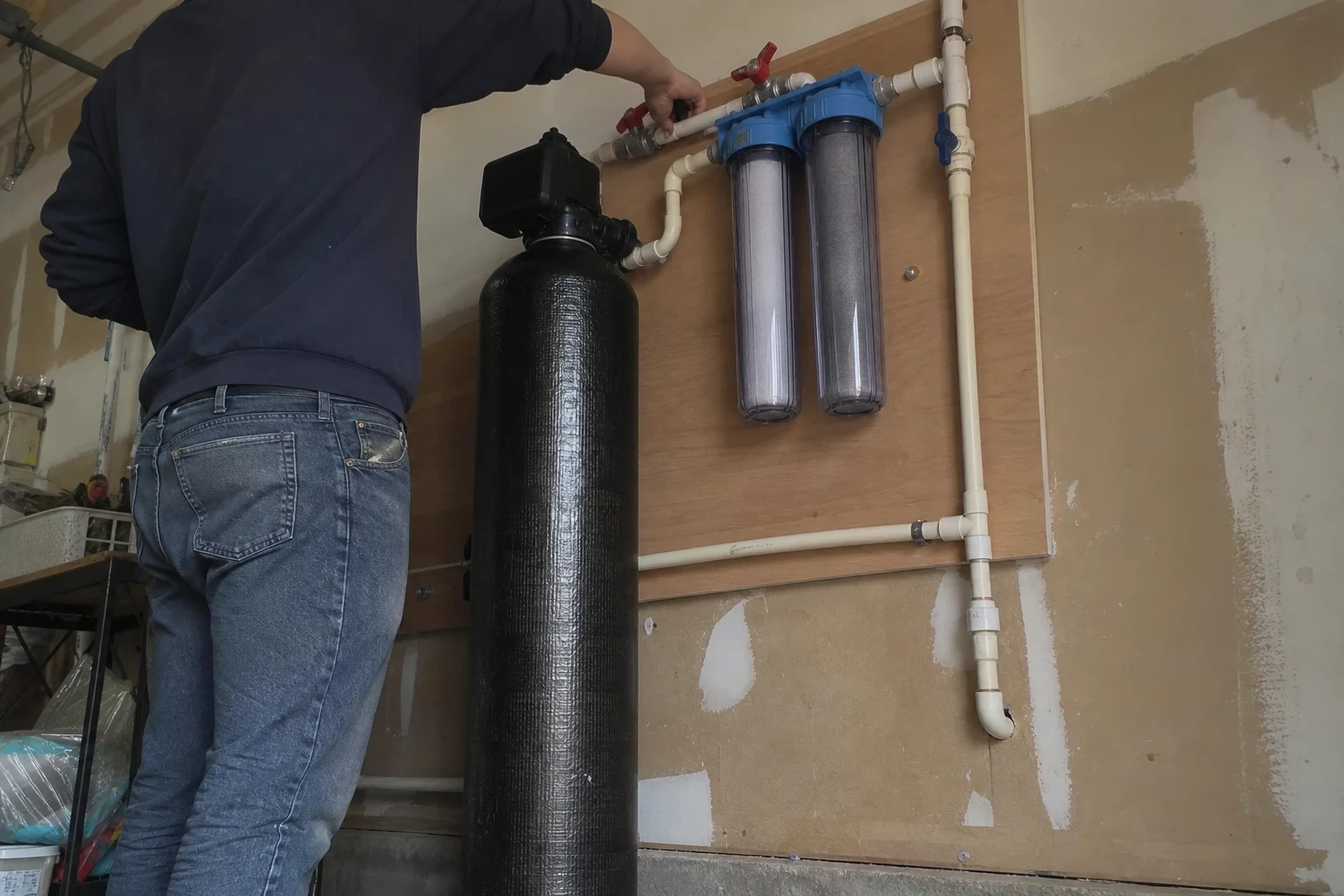
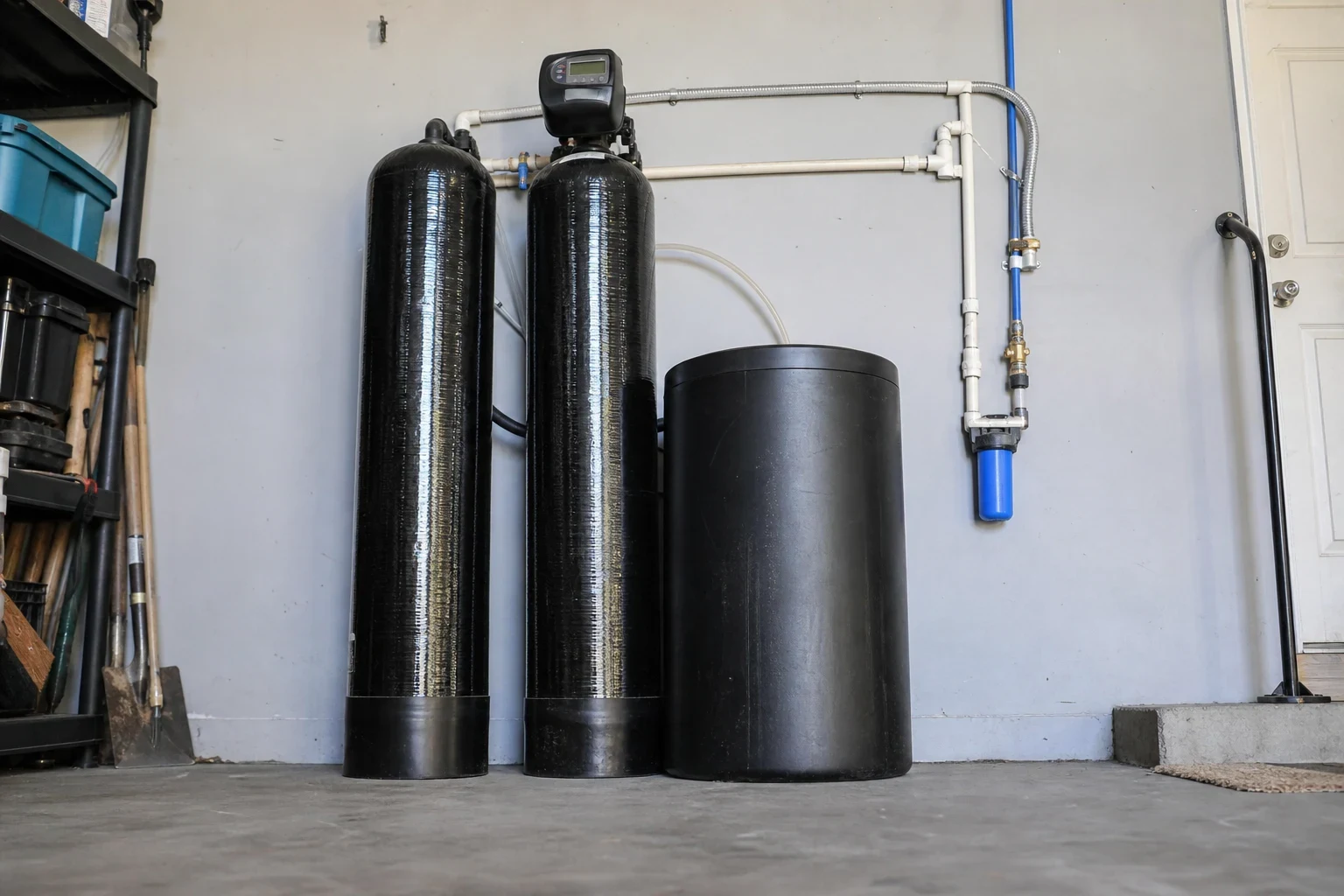
Each system solves a different problem, so we match the equipment to what is in your water and how your home uses it. Whole-home filtration uses carbon media at the main line to take out the chlorine or chloramine taste at every tap. A water softener swaps calcium and magnesium for sodium through resin beads, which stops scale in water heaters and on fixtures. Reverse osmosis sits under the kitchen sink for drinking and cooking water, and UV water treatment adds a lamp chamber that inactivates bacteria as water passes through.
Whole-Home Filtration
A point-of-entry sediment and carbon system on your main line that cuts disinfectant taste and odor at every faucet, shower and appliance.
Water Softeners
Ion-exchange softeners sized by grain capacity from your measured hardness, plumbed with a bypass valve and set up to regenerate only when your home needs it.
Reverse Osmosis
An under-sink reverse osmosis system for drinking and cooking water, fitted with its own faucet and a properly sealed drain connection.
UV Water Treatment
A UV chamber at your main line that inactivates bacteria, viruses and cysts without chemicals, sized to your flow rate and protected by a sediment prefilter.
What Drives the Cost of a System
Install prices differ because every house has its own equipment needs and plumbing layout. Below are the items that raise or lower a quote. We cover each one with you by phone, so the final bill holds no surprises.
You get a phone quote first, then a written confirmation once we have seen your plumbing. We never guess at dollar amounts ahead of time. Qualifying homes get standard professional installation included.
- Type and size of system
- Putting a single reverse osmosis unit under the kitchen counter is much less work than cutting a carbon tank into the main line of a four-bathroom house. Tank and valve sizes are set by your home's peak flow, so a bigger household with more fixtures needs larger equipment.
- Reaching your main water line
- When the supply line comes up through an open garage wall, tying in goes fast. When it sits behind drywall or cabinets, there is more cutting and patching. In homes on a slab, the line's entry point usually sets where the equipment goes.
- Drain and electrical
- Softeners and reverse osmosis units require a drain hookup with an air gap, and UV systems require an outlet close by. Running either one where none exists means extra labor.
- State of your current plumbing
- Old fittings that have turned brittle or shutoff valves that have corroded may need replacing before the new equipment can be safely connected. You see photos before we do that work.
- Hauling away old equipment
- Removing and disposing of a worn-out softener or an old filter housing makes the job take longer.
- Ongoing media and cartridge costs
- Carbon media, RO membranes and UV lamps all need replacing at different intervals. We list what those replacements will cost so you can weigh systems across years, not only the day they go in.
How We Work in Your Home
Most of what we do is ordinary practice done carefully. The difference is that you can see it, on paper and in photos.
Photos of what we find
Scale on a water heater element, a cracked filter housing, corrosion at a fitting: we photograph it and note where it was. You keep the photos. They help if you later need to show a plumber, a home warranty company or an insurer what was there.
Plain talk about insurance
If an old softener tank or filter housing has leaked, we document the failed part, the water marks and the date we saw them. We explain what an adjuster usually asks for. We are not the adjuster, and your policy decides what is covered, so we never promise a claim outcome.
Equipment matched to the water report
A softener only makes sense when hardness is high enough to cause scale. We read your water report with you and recommend a softener only when the numbers support it.
Every part named in the quote
The quote lists the housing, the media or membrane, the valves and the fittings by name. If a bypass valve or a drain line is needed, it is on the page with the reason for it.
Your home protected while we work
We lay drop cloths at the work area, shut the main valve only as long as needed and flush the new system before we leave. Old cartridges and packaging leave with us.
From First Call to a Flushed System
A typical install is finished within a single visit. These are the steps we follow, in order.
- 1
Your phone call
Tell us what you notice: chlorine smell, white crust on faucets, spots on glasses, or a softener that leaked. We ask a few questions about your home and give you a starting quote.
- 2
Water test and report
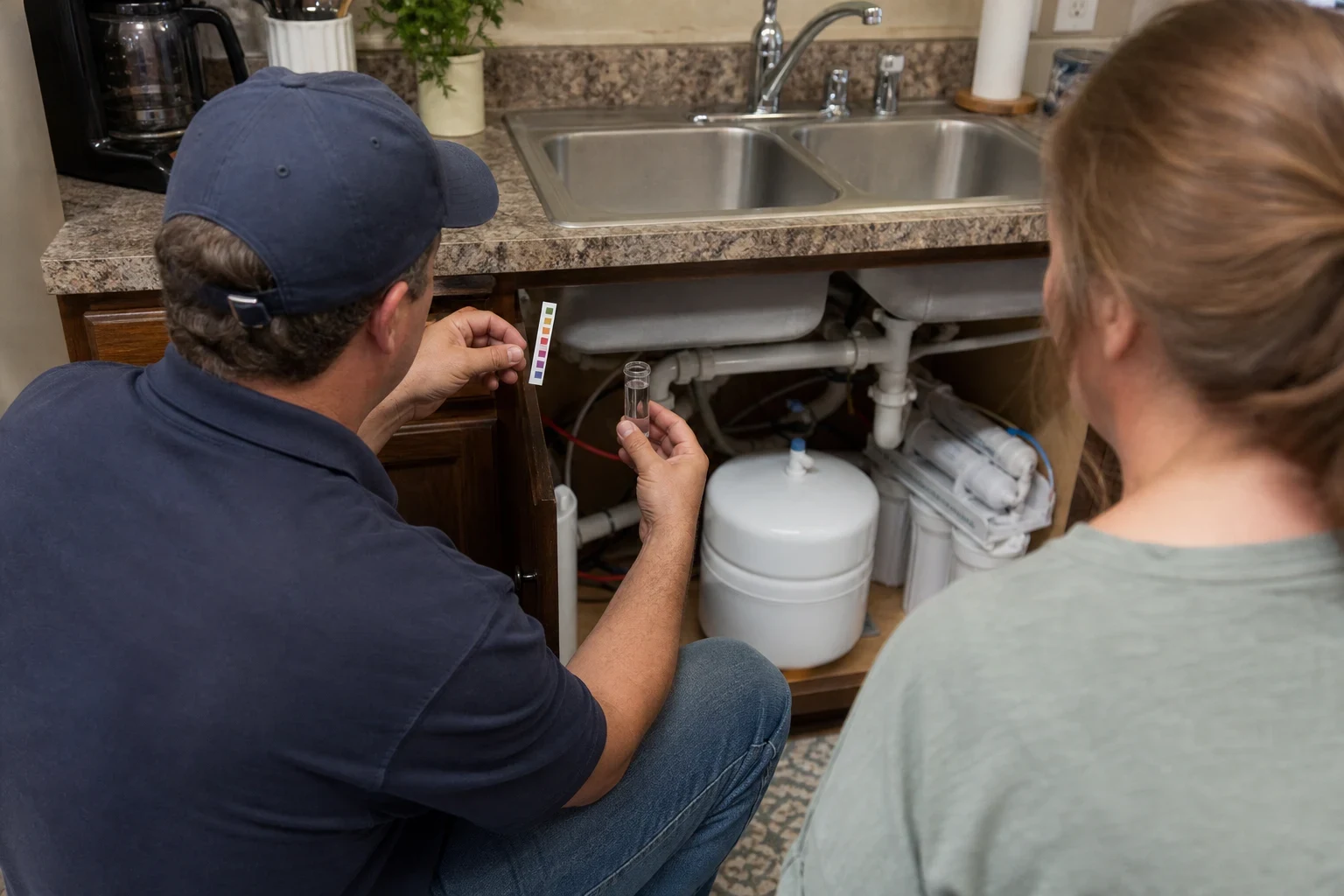
We check your water and hand you a written report. It shows hardness and the other readings that decide which system fits, so the recommendation rests on numbers you can see.
- 3
Written quote with photos
You get the itemized quote plus photos of the install spot and anything we found worth noting, like scale buildup or a worn valve.
- 4
Install day
We shut off the water, install the system with a bypass valve, connect drain and power as needed, then flush and check for leaks at every joint.
- 5
Walkthrough and records
We show you how the bypass works and when media or filters need changing. Your photos and quote stay with you for your home's records.
What Homeowners Ask Us Most
What causes the chlorine smell in my tap water?
North Texas cities disinfect their water so it stays safe across miles of pipe, and many of them use chloramine. That disinfectant is the smell and taste you notice. A whole-home system with catalytic carbon takes it out at the main line, so every tap and shower improves, not only the kitchen sink.
Is a water softener really necessary?
It depends. A softener pays off when your water is hard enough to build scale in the water heater, on shower glass and inside faucet aerators. The hardness number on your water report tells the story, and we only suggest a softener when that number calls for one.
How does reverse osmosis compare to a pitcher filter?
A pitcher holds a small carbon block that mostly helps taste. Reverse osmosis forces water through a semi-permeable membrane that strips out many more dissolved solids, including metals such as lead from older faucets and solder. It supplies its own tap at the kitchen sink for drinking and cooking water.
Does homeowners insurance cover a filtration system or a leak?
New equipment is not usually something insurance pays for, and the way a policy handles a leak depends on its terms and on whether the damage happened suddenly or over time. We can photograph the failed part and the damage, record the dates and put what we found in writing. The coverage decision belongs to your insurer and adjuster, not to us.
Should city water get UV treatment?
On treated city water, UV is usually an added safeguard, not a requirement. It is worth considering if you want a second line of defense against bacteria, such as when someone in the home has a weakened immune system. If we think it would do little for you, we will say so.
When do filters, membranes and lamps need replacing?
It depends on the equipment and how many gallons your household uses daily. Reverse osmosis prefilters typically get changed once or twice a year, and the membrane outlasts them. UV lamps weaken with age and are normally swapped every year, even while they still light up. Whole-home carbon media lasts longest, and your quote lists the expected schedule for your system.
How long is installation, and will my water be shut off?
Putting in an under-sink reverse osmosis unit generally takes a couple of hours. Softeners and whole-home systems run longer since we have to cut into the main line. Your water is off only during those connections, and we let you know before we close the valve.
Is your installation covered by a warranty?
Yes. Every install comes with a 1-year workmanship warranty covering installation-related defects. If one of our fittings or connections causes a problem during that year, call us and we will return to check it.
About Water Filtration Farmers Branch
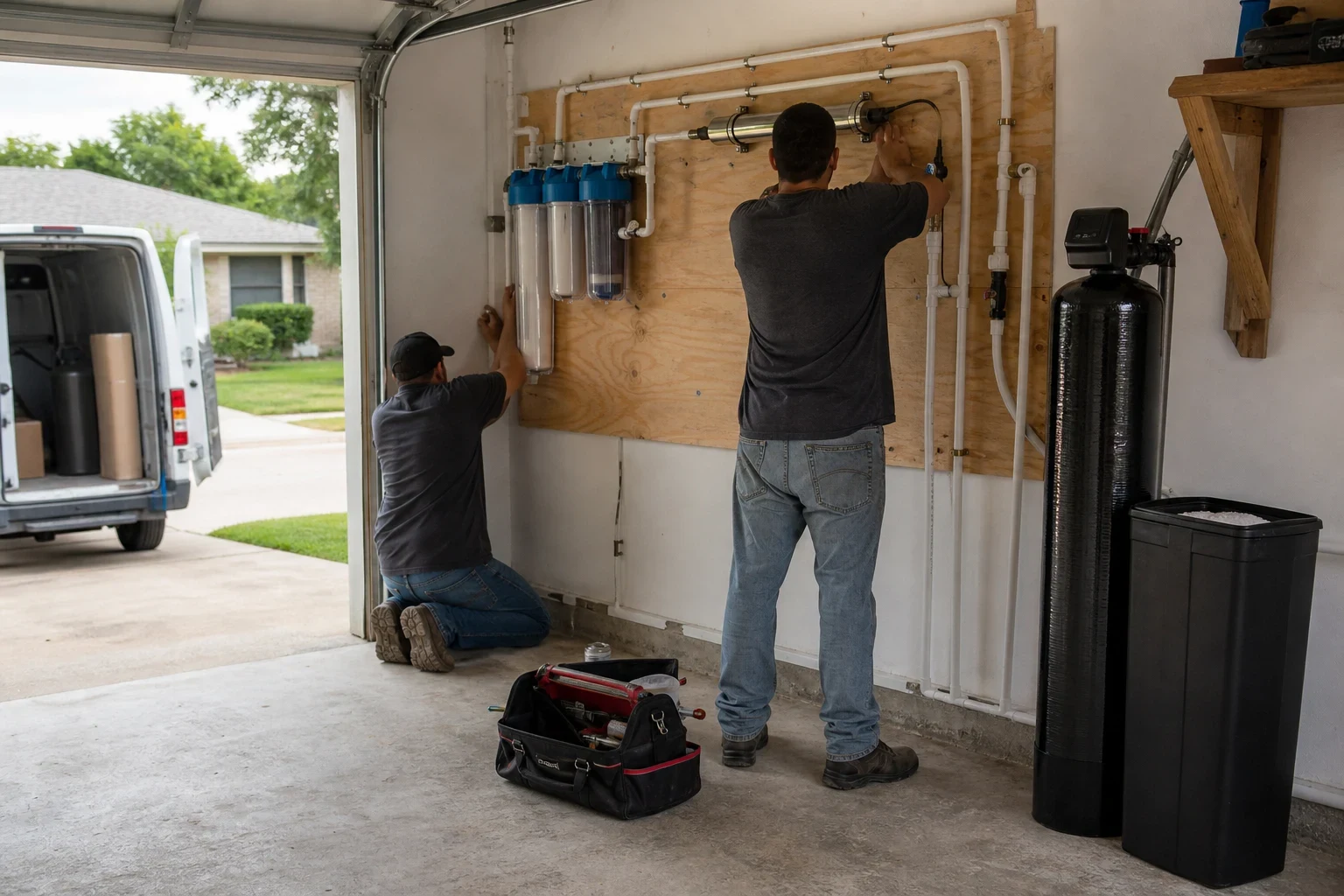
We are a local water filtration company working inside homes in Farmers Branch, TX and the towns around it. Our work is limited to four things: whole-home filtration, water softeners, reverse osmosis and UV water treatment. Keeping that list short lets us know each system well, down to which carbon grade handles chloramine and which resin holds up to hot summers in a garage.
We explain why, not just what. If your faucet aerators clog with white grit, we tell you it is calcium carbonate dropping out of heated water. If a quote includes a part, you will know what it does. And when something has gone wrong, like a leaking tank, we write down and photograph what we see so you have a clear record to work from.
Know What Your System Will Cost Before We Start
Tell us what you are seeing in your water and where your main line is. We will give you a quote over the phone and follow it with an itemized version in writing.