ServicesReverse Osmosis
Reverse Osmosis Drinking Water in Farmers Branch
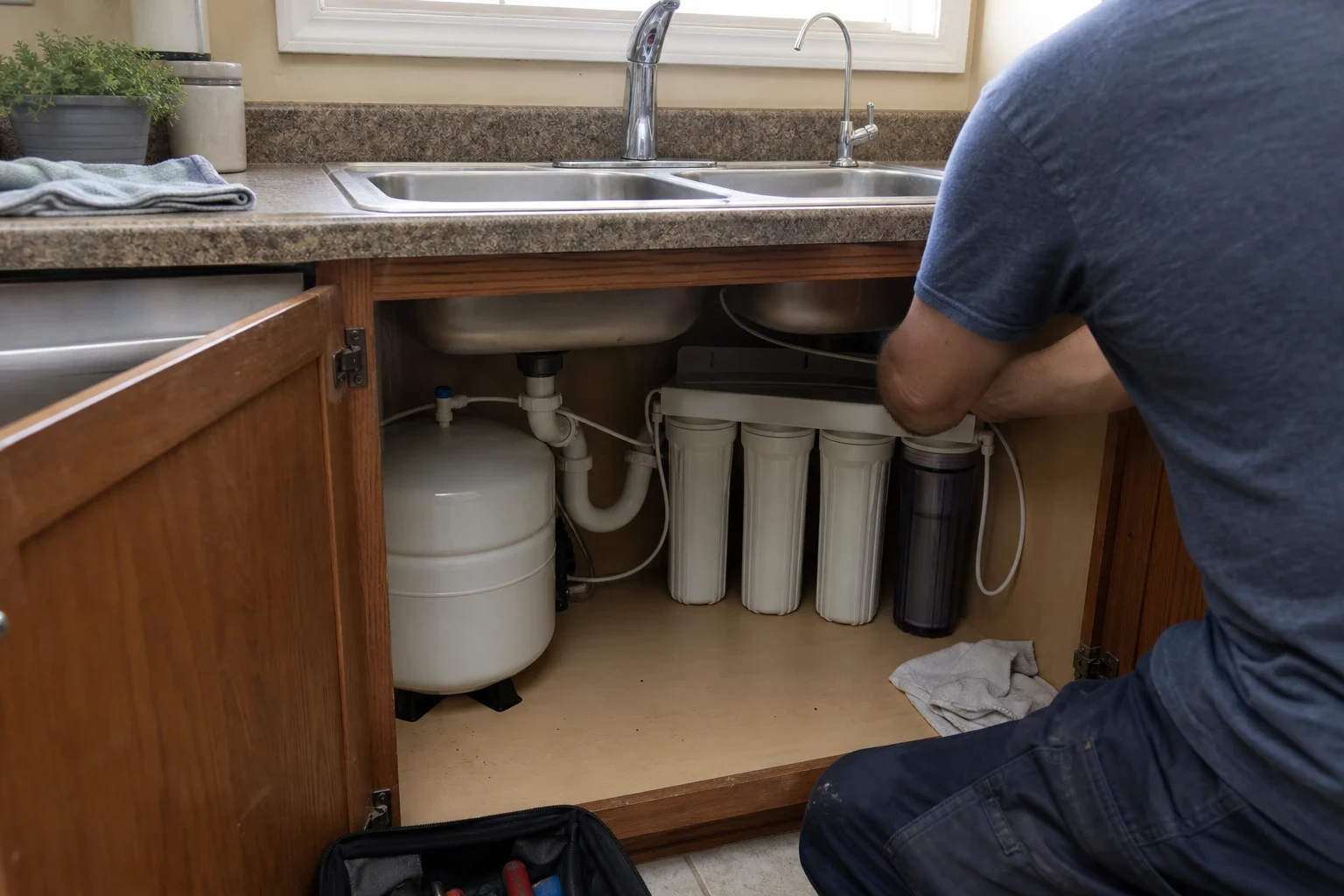
We install under-sink reverse osmosis systems that push your water through a thin-film membrane to strip out dissolved minerals, lead and chlorine taste. You get clean drinking and cooking water from its own faucet, a tidy cabinet and a written filter schedule you can actually follow.
What a Reverse Osmosis System Does at Your Sink
Reverse osmosis uses household water pressure to force water through a semi-permeable membrane with pores small enough to hold back dissolved solids, lead, fluoride, nitrate and most other ions. The rejected water carries those contaminants down the drain. What passes through collects in a small pressurized tank under your sink.
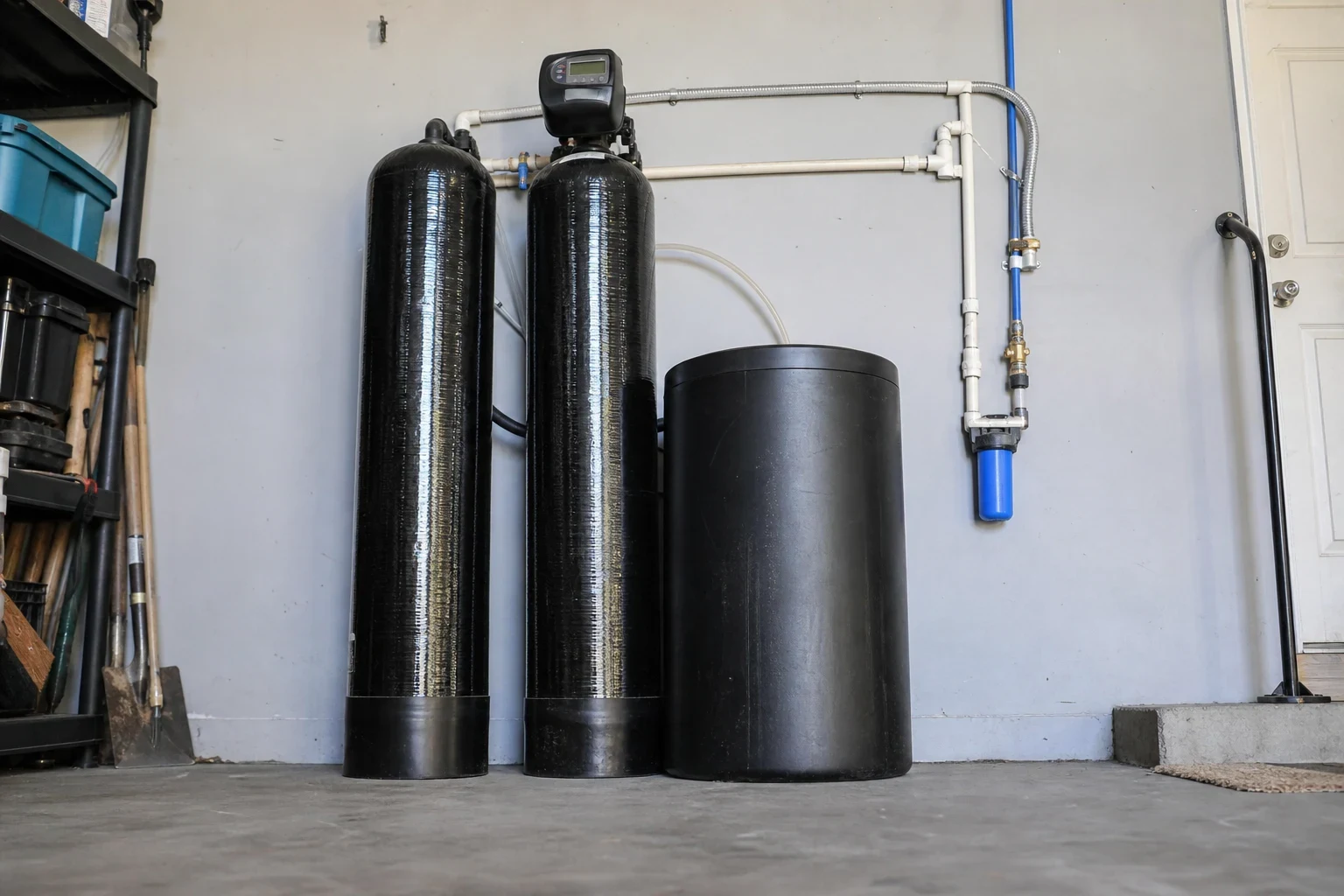
It is a point-of-use system, built for the water you drink, cook with and use for coffee or ice. If you want chlorine taste gone from every tap and shower, whole-home filtration is the better fit, and many homes run both. Water in the Farmers Branch area is treated city water, so we treat RO as a taste and extra-assurance upgrade, not a fix for an unsafe supply.
We also handle the less pleasant side of under-sink work. If an older system has leaked into your cabinet, we photograph the failed fitting and the damage before we remove anything, so you have a clear record to share with your insurer. Your adjuster decides coverage; we just make sure the facts are documented.
What Your Installation Includes
Sediment and carbon prefilters
The sediment stage catches grit and pipe scale. The carbon block removes chlorine and chloramine before they reach the membrane, because both slowly break down thin-film composite membranes.
Thin-film composite membrane
This is the stage that does the real work on dissolved solids and heavy metals. We seat it in its housing, flush it and discard the first tank of water, which carries preservative from the factory.
Storage tank and auto shutoff
The tank has an air bladder that needs the right pre-charge to push water to your faucet. We check that pressure before filling, and confirm the shutoff valve stops flow to the drain once the tank is full.
Dedicated faucet and drain air gap
We mount the faucet through your sink deck or countertop and connect the drain line with a saddle and air gap, so wastewater can never siphon back into the system.
Leak check and cleanup
Every compression fitting is checked under pressure with dry paper towels underneath. We leave the cabinet clean and the shutoff valve labeled.
Signs Reverse Osmosis Makes Sense for Your Home
You buy bottled water for taste
If the tap tastes like a swimming pool and the family reaches for jugs instead, an RO faucet replaces that habit with water that tastes clean.
Your plumbing predates 1986
Lead solder was common on copper joints before the federal ban that year. A membrane system removes lead picked up inside your own pipes on the way to the glass.
Cloudy ice and spotted kettles
Dissolved minerals show up as cloudy cubes and white crust inside kettles and coffee makers. RO water leaves far less behind.
An old system drains nonstop
A trickle you can hear in the drain line long after the tank should be full usually means a failed shutoff valve or a worn membrane.
Water stains on the cabinet floor
Swollen particleboard or a white mineral ring under the sink points to a slow leak at a fitting or tank valve. Have it looked at before the damage spreads, and keep it photographed.
How Installation Day Goes
- 1
Pressure and space check
We measure your incoming water pressure, since most membranes need around 40 psi to produce well. If it runs low, we explain whether a small booster pump is worth adding. We also confirm the tank and housings fit around your disposal and drain.
- 2
Faucet and drain connections
We drill or use an existing sink hole for the faucet, install the feed valve on the cold line and fit the drain saddle above the trap so water drains cleanly.
- 3
Mount, flush and test
The filter rack is mounted to the cabinet wall, tubing is cut square and fully seated, and the system is flushed. We test the finished water with a TDS meter in front of you so you can see the drop from your tap.
- 4
Walkthrough and schedule
You get a written schedule for prefilter and membrane changes, and we show you how to shut the system off if you ever need to.
What Moves the Price
Most of the cost sits in the system itself and in what your sink and cabinet need to accept it. We quote by phone once we know the basics, and we confirm the details before any work starts. Standard professional installation is included for qualifying homes.
- Countertop material
- Drilling a faucet hole through quartz or granite takes a diamond core bit and more time than using an open hole in a stainless sink.
- Water pressure
- Homes with low incoming pressure may need a booster pump to get full output and a reasonable waste ratio from the membrane.
- Remineralization and tank size
- Some people prefer a remineralization stage that adds a little calcium and magnesium back for taste. A larger tank costs more but serves a bigger household.
- Refrigerator or ice maker line
- Running tubing to a fridge depends on distance and whether the line must pass through cabinets or flooring.
- Removing an old system
- Taking out a failed unit, capping old fittings and repairing a damp cabinet base adds time.
Reverse Osmosis Questions We Hear
Something not covered here? (972) 793-8402
How much water does an RO system send down the drain?
Every membrane rejects some water to carry contaminants away. Modern systems run at a much better ratio than older units, and a properly working shutoff valve stops all flow once the tank is full. Low household pressure makes the ratio worse, which is why we check it first.
Will the RO faucet run slower than my kitchen tap?
Yes, somewhat. Water comes from the storage tank, so flow is gentler than your main faucet. It fills a glass or pot without trouble, and a properly charged tank keeps the flow steady.
How often do the filters need changing?
Prefilters are typically changed every six to twelve months, depending on how much water you use. The membrane usually lasts two to three years when the carbon stage is replaced on time. We write your schedule down before we leave.
Does reverse osmosis remove fluoride?
A thin-film membrane removes most fluoride along with other dissolved minerals. If you want to keep some minerals for taste, a remineralization cartridge adds calcium and magnesium back after the membrane.
My old system leaked into the cabinet. Will insurance pay for it?
That decision belongs to your insurer and depends on your policy. What we can do is photograph the failed part and the water damage before removal and give you a written note of what we found. That gives your adjuster clear facts to work from.
Do I still need a water softener if I add RO?
RO only treats the water at one faucet. If scale is building up in your water heater and fixtures, a water softener handles that across the house, but we only suggest one if your hardness numbers support it.
Ready for Better Drinking Water
Tell us about your sink, countertop and what you want from your water. We will give you a clear quote and explain exactly what the installation involves.