ServicesWater Softeners
Water Softeners in Farmers Branch
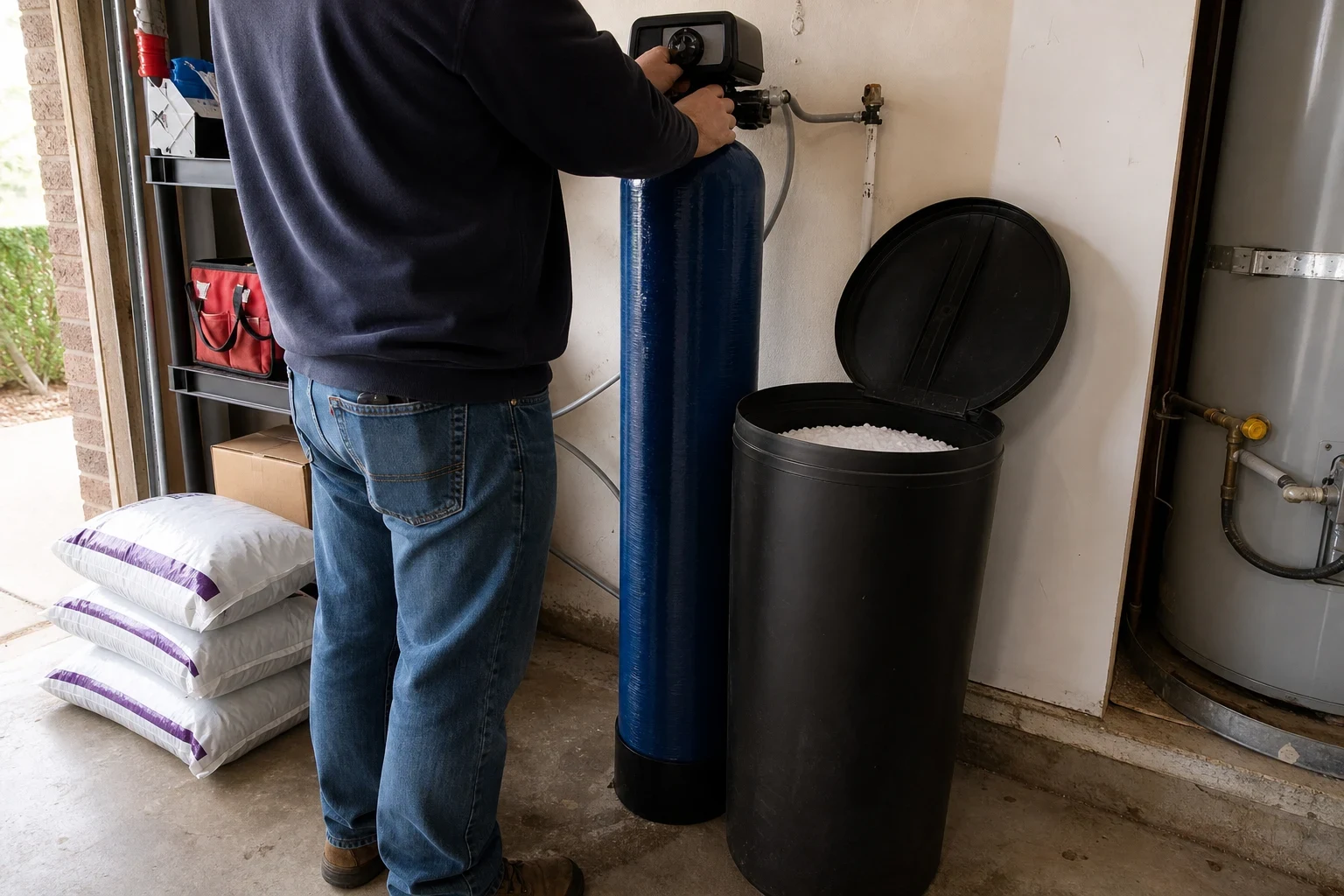
We size a water softener from the hardness we measure at your tap, not a guess. Then we install it with a bypass valve, a code-compliant drain air gap and a control valve programmed for your household. That way it removes scale without wasting salt.
What a Softener Does and When It Makes Sense
Calcium and magnesium ride along in hard water as dissolved minerals. Heat inside a water heater tank, or evaporation on a glass shower door, forces them out of solution as scale. A softener sends your water through a tank of resin beads that swap those minerals for sodium or potassium ions. Over time the beads fill up, and the unit rinses them with brine from the salt tank to recharge them.
A softener is the right call when hardness is high enough to leave scale. It is not a cure for chlorine taste, odor or trace contaminants. We read your hardness in grains per gallon first. If the number does not justify a softener, we tell you so. If taste is the real complaint, whole-home filtration or reverse osmosis may fit better.
What Comes With Your Softener Install
- Measured hardness and correct sizing
- We test hardness in grains per gallon and ask how many people are in the household. Grain capacity is set so the unit regenerates every several days rather than every night, cutting salt use and valve wear.
- Demand-based control valve
- Our control valves count the gallons you use and regenerate only when the resin is close to full. A timer-only valve regenerates on a fixed schedule, used water or not.
- Bypass valve and loop hookup
- Every softener we install comes with a bypass valve. A single turn sends water around the unit, so your taps stay on while the valve is serviced or the resin is changed. If your home has a softener loop, we connect to it. If not, we explain what plumbing is required before starting.
- Air-gapped drain line
- Water from regeneration runs to a drain through a proper air gap, which keeps wastewater from being drawn back into the softener. Pushing a hose into a floor drain with no gap is a frequent shortcut, and we skip it.
- Brine tank filled and valve programmed
- We load the brine tank, enter the hardness and regeneration time on the valve and run one complete cycle before leaving. You watch it regenerate and learn where each setting is.
- Old unit taken out
- When a worn-out softener is already there, we disconnect it and take it away. Standard professional installation is part of the price for homes that meet our install requirements. On your phone call we review the install spot and tell you whether your home qualifies.
Clues That Your Home Needs a Softener
Chalky buildup on fixtures
The white crust on showerheads, faucet aerators and glass doors is calcium carbonate. With hard water, it returns just days after you scrub it off.
Popping or rumbling from the water heater
Scale collects at the bottom of a tank heater and traps water that boils against the burner or element. That sound tells you the heater is straining and losing efficiency.
Filmy dishes and scratchy towels
Hardness minerals tie up detergent, leaving less to do the cleaning. Glassware comes out cloudy and towels stay rough no matter how much soap you add.
An older softener using salt without softening
Over the years resin breaks down and chlorine can foul it. A jammed valve or a salt bridge in the brine tank can also block regeneration. We find out which it is before recommending a new unit.
Puddles near the softener
A split resin tank, worn O-ring or cracked bypass can let water onto the floor. If it caused damage, we photograph the part that failed and write up what we saw, giving you a clear record for your insurer. We are not the adjuster and do not guess at what a policy covers.
Where Your Softener Quote Comes From
Hardness, household size and plumbing vary from one house to the next, so softener pricing varies too. Your quote shows equipment and labor on separate lines, so you can see what each part of the job costs. If the number shifts once we see the install spot, we explain the reason before any work begins.
Grain capacity
Higher hardness and more people mean a larger resin tank. An oversized unit wastes money, and an undersized one regenerates too often and wears out sooner.
Plumbing at the install spot
An existing softener loop is the simplest tie-in. No loop, a long run to a drain, or no outlet nearby adds labor and material.
Pre-filtration
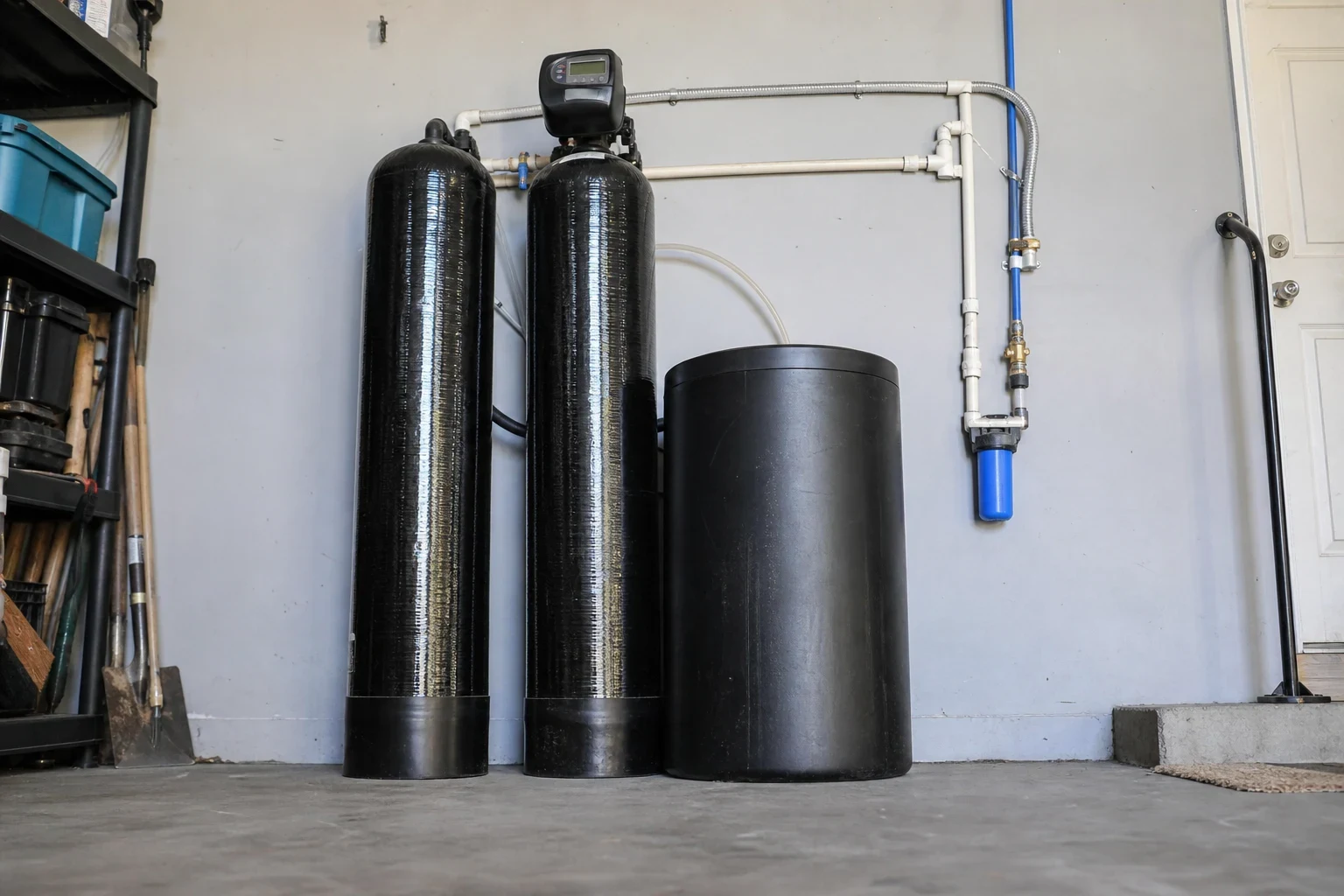
Chlorine in city water slowly breaks down resin. A carbon pre-filter ahead of the softener extends resin life and adds to the upfront cost.
Removing an old system
Disconnecting and hauling away a failed unit, or repairing damaged fittings it leaves behind, is part of some jobs and not others.
How a Softener Job Runs
- 1
Phone call and quote
You tell us what you are seeing and where the main line enters your home. We explain how the water test works and give you a quote based on the likely equipment and plumbing.
- 2
Hardness reading at your home
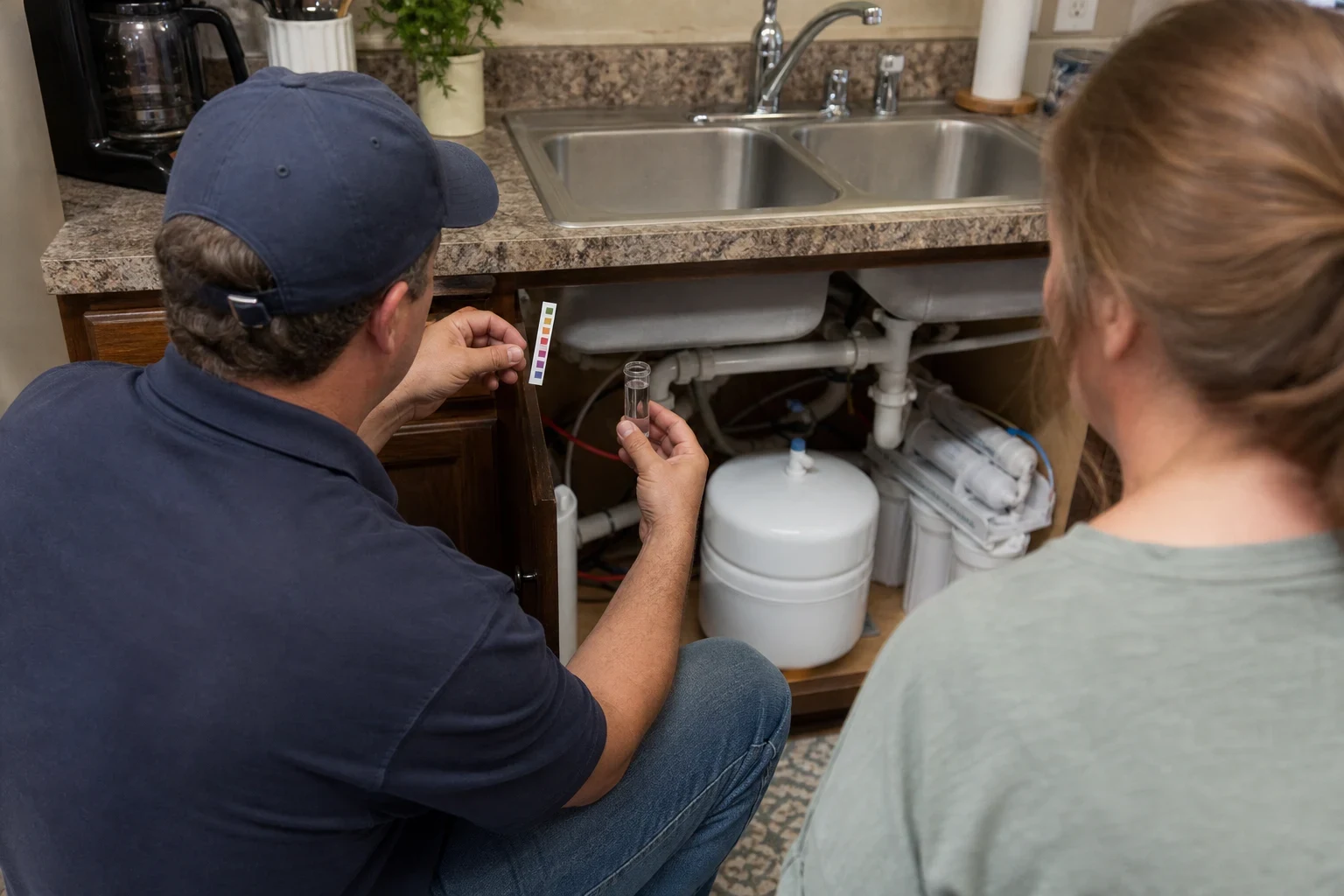
We measure hardness at the tap and look at the install spot, drain access and electrical outlet. We confirm the grain capacity and any changes to the quote before work is scheduled.
- 3
Install day
We shut off water, cut in the bypass and connections, run the drain line with its air gap and set the tanks level. In a Farmers Branch garage, we keep the brine tank off direct sun so summer heat does not bake the salt into a crust.
- 4
Startup and walkthrough
We flush the resin, program the valve, run a regeneration and check every joint for drips. Then we show you how to add salt, use the bypass and spot a salt bridge.
Common Softener Questions
Does softened water taste salty?
At normal hardness levels, most people cannot tell. Sodium is added in step with the hardness removed, so the harder the water, the more sodium. If you watch your sodium, you can use potassium chloride instead of salt, or add a reverse osmosis faucet at the kitchen sink to take most of it out of drinking water.
Can a softener get rid of chlorine taste or odor?
No. Resin exchanges hardness minerals for sodium or potassium and does nothing about chlorine or smells. For taste, we suggest carbon in a whole-home filtration system, usually mounted before the softener so it also protects the resin from chlorine.
How frequently do I need to add salt?
That comes down to your hardness, how many people live with you and whether the unit is sized correctly. A properly sized tank with a metered valve uses clearly less salt than an older timer unit. Once we read your hardness, we give you a likely range and show you how to check the salt level.
Is it possible to fix my old softener rather than replace it?
In many cases, yes. A worn seal, piston or injector in the control valve can be serviced, and a sound tank can take fresh resin. When the tank is cracked or parts can no longer be found, we explain why a new unit is the better choice.
My old softener leaked and ruined the floor. Can you help with my claim?
We can record the failure with photos and a written note of the cause, such as a cracked tank or split bypass. What goes to your insurer is up to you. Your insurance company makes the coverage decision, and we never promise a result.
Find Out Whether a Softener Fits Your Home
Tell us about the scale, the water heater noise or the old unit in the garage. We will set up a water test and price a properly sized softener for you.