ServicesWhole-Home Filtration
Whole-Home Filtration in Farmers Branch
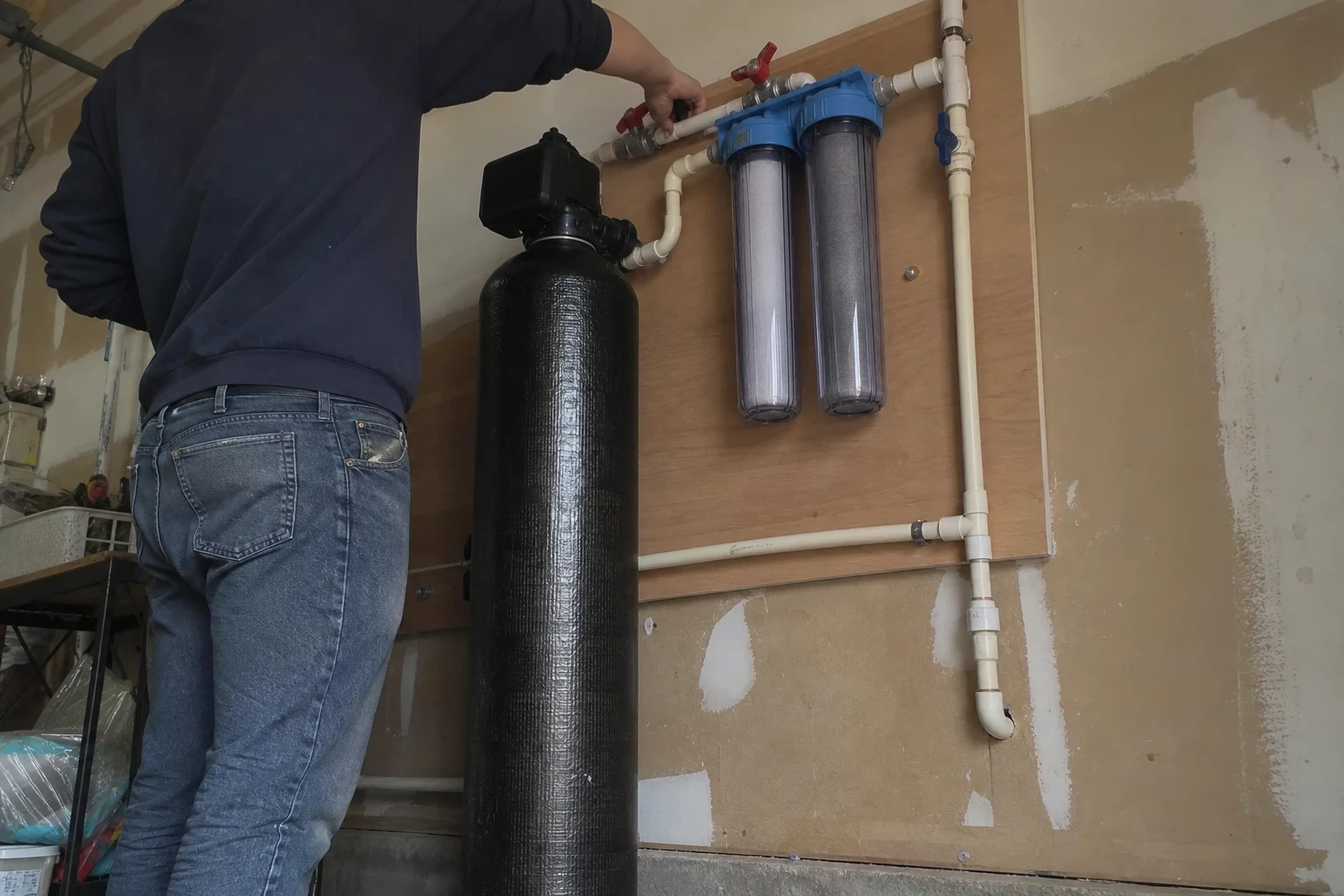
We install a sediment and carbon system where the water line enters your home, so every tap, shower and appliance gets filtered water. We size it to your pipe and flow rate, photograph the finished install and give you a written record you can keep.
What a Point-of-Entry System Actually Does
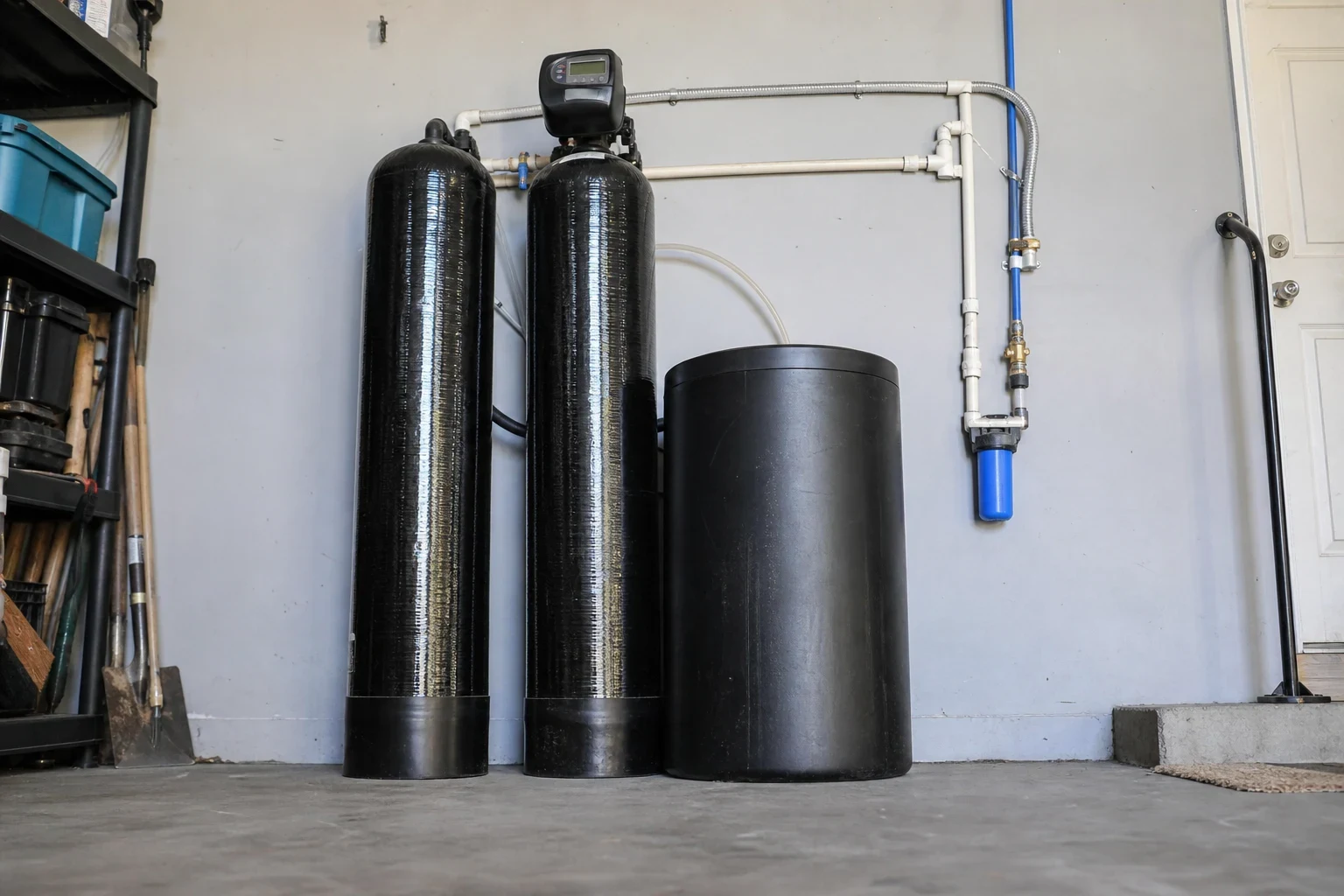
We plumb a whole-home system into the supply pipe right where it comes into your home, downstream of your shutoff valve and ahead of the water heater and every branch line. Water first moves through a sediment prefilter that traps grit and loose pipe scale. It then flows through a tank of activated or catalytic carbon, which adsorbs chlorine along with the taste and odor compounds that come with treated city water. Catalytic carbon is the better pick when a supply is disinfected with chloramine, since ordinary carbon needs much longer contact time to break it down.
It is the right call when the smell of disinfectant bothers you in the shower, not just at the kitchen sink, or when you want filtered water for laundry, ice and cooking without a cartridge at every faucet. It does not soften water or kill microorganisms. For those jobs we point you to our Water Softeners and UV Water Treatment pages, and for drinking water polished further, Reverse Osmosis.
What Your Installation Includes
- Sizing to your flow
- We check your main line diameter and count fixtures to estimate peak demand in gallons per minute. An undersized tank shortens carbon contact time and drops pressure when two showers run at once.
- Sediment prefilter
- A housing with a replaceable cartridge goes ahead of the carbon tank. It keeps fine particles from fouling the carbon bed, which helps the media last.
- Carbon tank and control valve
- We set the tank on a level base and connect the control valve. Backwashing models get a drain line run with a proper air gap so wastewater cannot siphon back.
- Three-valve bypass
- Inlet, outlet and bypass valves let you send water around the system during service without shutting off your home's supply.
- Photos and a written record
- We photograph the connections, valves and drain routing and note the model, media and install date. Those records help if you ever need to show a plumber, a buyer or an insurance adjuster how the system was put in.
- Cleanup and walkthrough
- We flush the new media to clear carbon fines, check every joint for weeping, haul off packaging and show you how to use the bypass.
Signs Whole-Home Filtration Fits Your Home
Pool smell in the shower
Hot water releases more disinfectant into the air. A kitchen pitcher filter cannot help with that, but a point-of-entry carbon tank treats the water before it reaches the heater.
Dry skin and itchy scalp after bathing
Many people notice this with chlorinated water. Carbon filtration removes most of the chlorine before it reaches the showerhead.
Grit in aerators and appliance screens
Particles that clog faucet aerators or the inlet screen on a washer or ice maker usually come from the supply or old pipe. A sediment stage catches them upstream.
Too many separate filters
If you are swapping cartridges on a fridge, a faucet and a showerhead, one system at the main can replace most of that upkeep.
What Moves the Price
Every quote is written line by line so you can see what each part costs and why. The biggest variables are the size of the system and how much plumbing it takes to reach the main. Standard professional installation is included for qualifying homes. We work out during the phone call whether your setup meets that standard, so you know before you commit.
Tank size and media
Larger homes with more bathrooms need more carbon to keep contact time up at peak flow. Catalytic carbon costs more than standard activated carbon.
Access to the main
A main that surfaces in the garage is simpler than one buried under a slab edge or behind finished walls. Extra pipe runs and wall work add labor.
Drain and electrical
Backwashing control valves need a drain and sometimes an outlet. If neither is nearby, we route one, which shows on the estimate.
Permits
If your city requires a plumbing permit for the tie-in, we pull it and include the fee in the quote.
How Install Day Runs
- 1
Phone conversation and quote
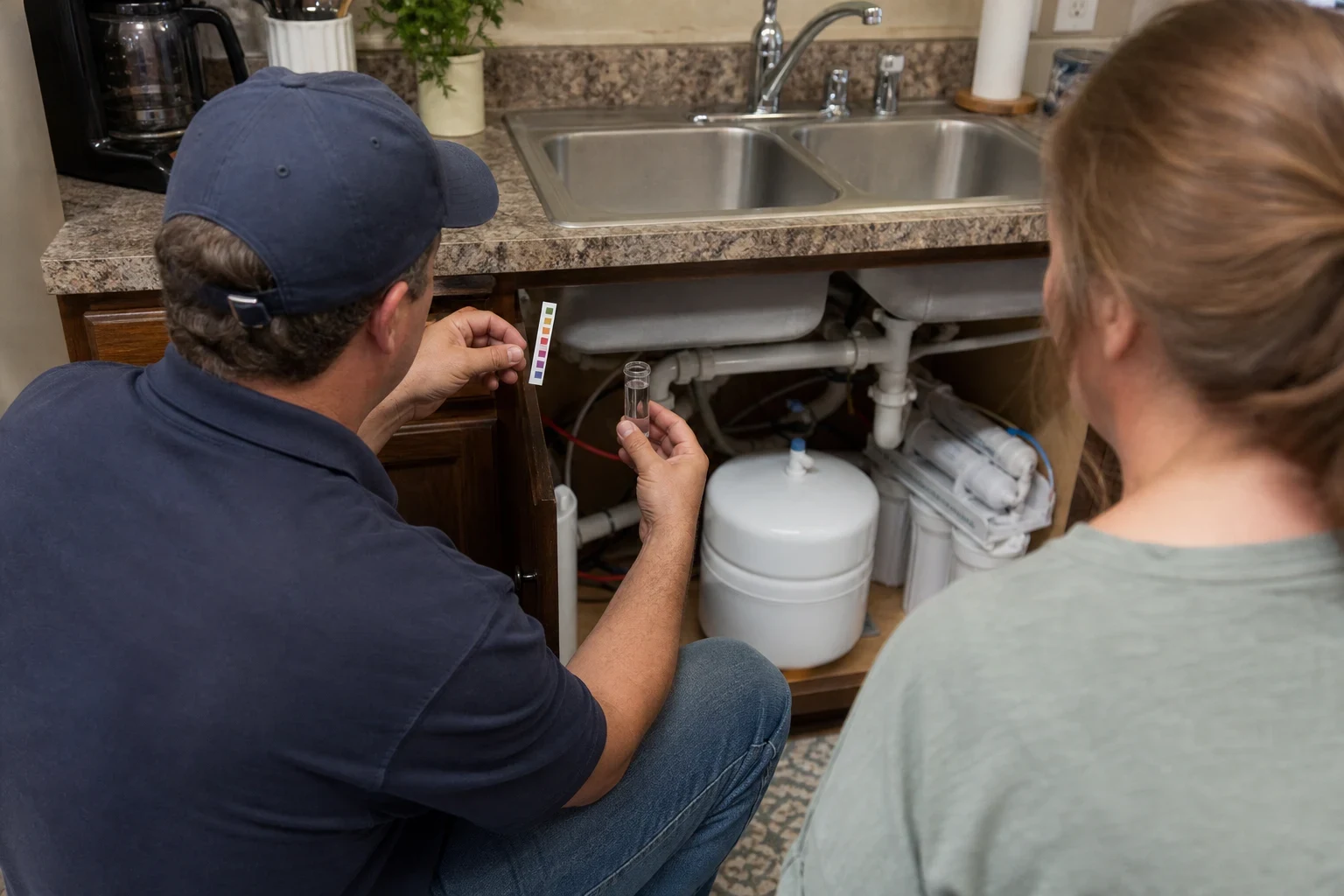
You tell us about your home, the plumbing material and what bothers you about the water. We can arrange a water test and a written water report so the quote rests on readings, not guesses.
- 2
Choosing the location
Most systems go in the garage or a utility area near where the main enters. We look for space, a level floor, a drain for backwash and protection from freezing.
- 3
Cutting in
We shut off the main, cut in the bypass loop in copper or PEX to match your lines, and mount the prefilter and tank. Water is usually off for a few hours.
- 4
Flush, test and document
We flush the carbon, pressure-check the connections and take the photos for your record. You get the paperwork before we leave.
Whole-Home Filtration Questions
Will filtering the whole house cut my shower pressure?
Expect a slight drop that most people never notice, as long as the tank and valve match your demand. Trouble starts when the equipment is too small for the gallons per minute your fixtures pull, so we measure the pipe and tally fixtures before choosing a model. If your pressure is already weak, we say so before any install.
Does it soften hard water?
No. Carbon removes chlorine and taste and odor compounds but leaves calcium and magnesium in place. If scale is your concern, read our Water Softeners page, and we can explain how the two systems pair on one line.
How often does the media need changing?
Sediment cartridges are swapped regularly, depending on how much particulate your water carries. Carbon tanks last much longer, and backwashing models extend media life. We note the recommended schedule on your install record.
If the system ever leaks, will my homeowners insurance cover it?
That depends on your policy and the cause, and only your insurer decides. What we can do is give you dated photos and a written record of the install, the parts used and the drain routing. Those documents help an adjuster see how the system was put in. We explain the process plainly, but we do not act as your adjuster or promise an outcome.
Do I still need a drinking water filter?
Many people find whole-home carbon water tastes good enough to drink as is. If you want lower dissolved solids or extra reduction of trace contaminants at the kitchen tap, an under-sink unit from our Reverse Osmosis page adds that layer.
Filtered Water From Every Faucet
Tell us about your home and your water, and we will size a system to your main line and walk you through each line of the quote. You also get a copy of every photo we take on install day.